Rubric
The Rubric Foundation
A charity dedicated to celebrating and promoting the Scots language.
Through their grant program they have funded a range of cultural and artistic projects, from visual art and music to poetry and performance.
By investing in artists, musicians, singers and poets, they aim to enrich Scotland's creative landscape and ensure the Scots language continues to thrive for future generations.

Completed projects


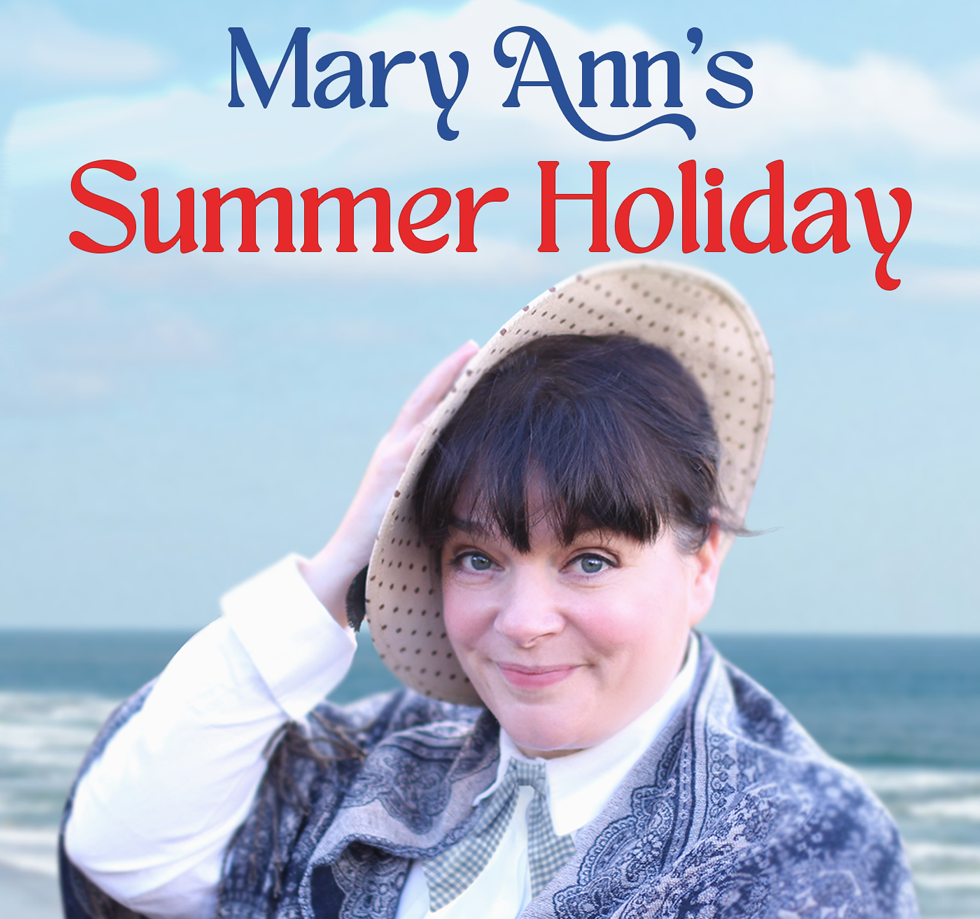
Award-winning Scots language theatre company launches free audiobook to help listeners relax and fall asleep.
When Mary Ann's long lost brother asks her to babysit in distant Northumberland, she almost declines in shock. But the idea of a summer holiday is tantalising, so she plucks up her courage, packs a dozen egg sandwiches and takes to the railways. Her path to the coast will not be easy. She must brave a wicked pig, five wee nightmares that bite and the treacherous Lindisfarne causeway.
But someone is waiting for Mary Ann in that wild landscape of sea and sky. If she can keep her head and follow her heart, this will be a summer to remember.
Adapted into Scots by award-winning playwright Martin Travers from a story by Jean Lang, and narrated by popular audiobook artist Helen McAlpine, Mary Ann’s Summer Holiday is the first sleep story from award-winning Scots language theatre company Braw Clan.
Sleep stories are audiobooks designed to help adult listeners wind down by providing gentle distraction, reducing cognitive load and easing the transition into sleep. They’re incredibly popular - sleep stories on the mental health platform Calm have been played over 63 million times.
Clare Yuille, Braw Clan’s Creative Director, said “We live in a world where fatigue and insomnia are common. Thanks to support from the Rubric Foundation, we’re delighted to launch our first sleep story. And as well helping people nod off at the end of a busy day, Mary Ann revives the work of overlooked Scottish writer Jean Lang. It’s also a showcase for the sensory pleasures of the Scots language.”
Martin Travers said “I discovered this loveable character under a table in Lanark Agricultural Centre. On picking up a copy of Jean Lang's North And South Of Tweed at a car boot sale, I found a strange wee yarn called The Tragedy Of Mary Ann Dodd. I just loved her the minute I met her. She’s such a modern character. And I knew Helen could bring Mary Ann, and the sparkling world of her summer adventure, to life. I’ve given our version a happier, ending. By the time listeners reach it, I hope they’ll love her as much as I do.”
Helen McAlpine, who won the Romantic Novelists’ Association Narrator of the Year in 2022, said: “Mary Ann cares so much about people and is full of good intentions, but she has a talent for causing chaos. She’s spent most of her life running around after her demanding mother so I think that’s why. She’s been sheltered and told what to do for so long, she hasn’t had the chance to develop common sense. So when we meet her, she’s like a toddler going out into the world on a big adventure. Everything delights or amazes her which is so refreshing. And as a narrator, she’s an absolute gift. The scrapes she gets into are hilarious but underneath it all she’s a good person with a huge heart. You can’t help but root for her.”
Mary Ann’s Summer Holiday is free for subscribers of Braw Clan’s mailing. It can be streamed or downloaded, and is accompanied by a full script, glossary and Story Pack.
Listeners are enjoying the story, with one remarking “This free audiobook from Braw Clan is a brilliant surprise. The storyteller is fantastic. I haven't got to the end yet as I do find myself nodding off.”
Hear a clip and find out more details about Mary Ann’s Summer Holiday at brawclan.com/mary-ann/.


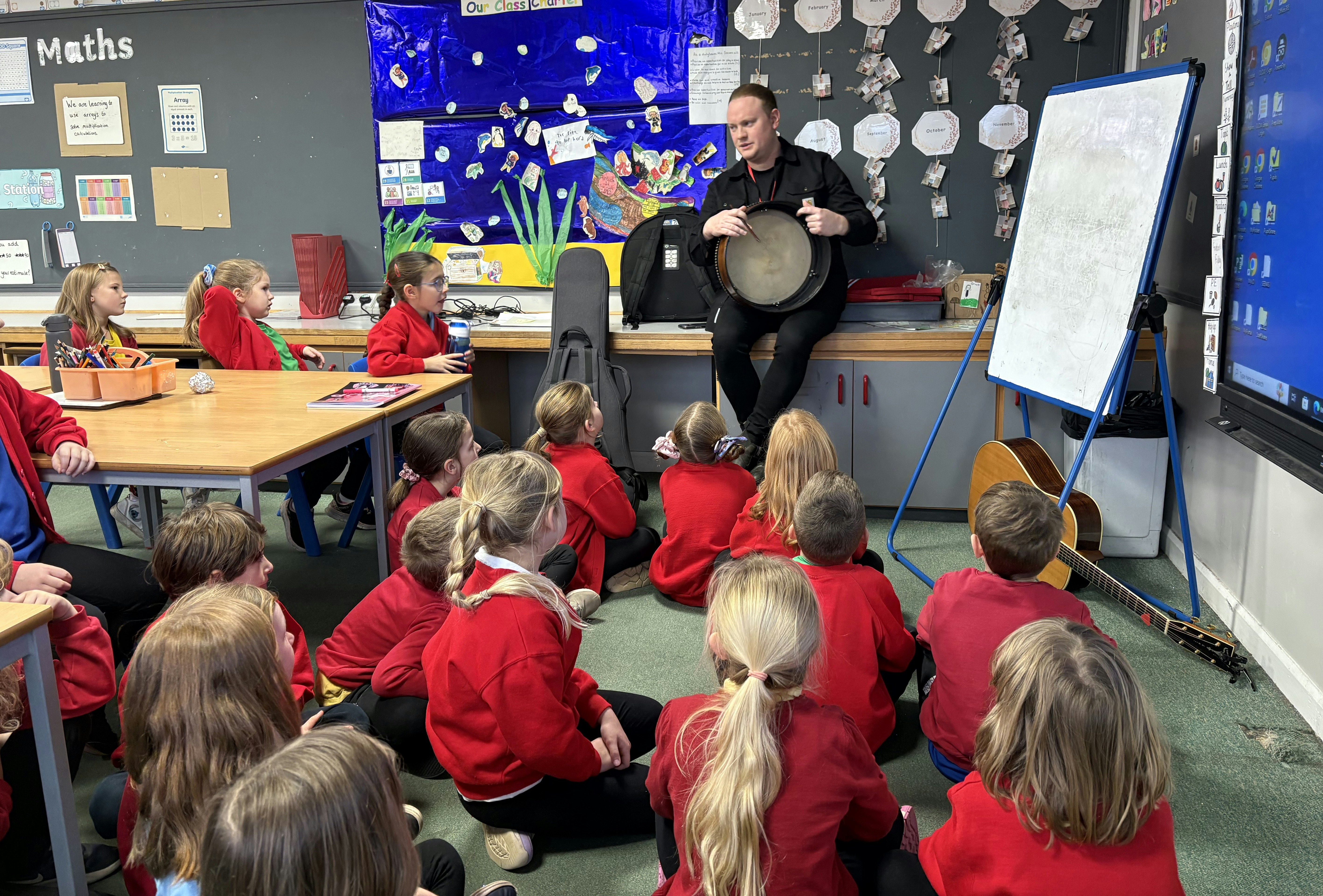
The Scots Sang an Leid Projeck (Scots Song and Language Project) was led by award-nominated Amy Lord – a singer, song group leader, and Scots language tutor with over two decades of experience teaching both children and adults in song and language. Over the course of eight weeks, she worked with pupils in Dunblane Primary school, introducing them to Scots language through traditional song. While the primary focus is on Scots language, the project also explored elements of Scottish culture, including heritage, history, and customs, through the engaging stories behind each song.
The programme consisted of seven in-class workshops—six led by Amy and one by supporting tutor and instrumentalist Adam Brown—concluding with a full school concert where pupils performed the songs and demonstrate the language they learned. This finale also included performances by five professional Scottish traditional musicians, showcasing instruments and styles such as Scots singing, guitar, fiddle, bodhran, and bagpipes.
A wide range of Scots songs was selected to suit the learning level and interests of each class, with a particular emphasis on seasonal and local songs. P5 and P6 pupils received workbooks to use throughout the project, while P3 and P4 classes took part in a modified version featuring simpler oral songs and shorter booklets, with a greater focus on vocabulary. Teachers also received a “Dominie’s Pack,” which includes materials and song tracks to support continued learning beyond the project and with further classes.
To deepen engagement and boost memory retention, there was also an illustration competition to show the language they’d learned, giving pupils an extra opportunity to connect creatively with the Scots language and songs.
The Huntly Ceilidh Day 2025 sought to teach, stimulate interest in and celebrate the traditional language and music of the north east of Scotland by bringing together participants of all generations and backgrounds for a day of tuition and performance.
The tutors for the afternoon workshops were: Michael Biggins on mixed instrument (BBC Radio Scotland Young Traditional Musician 2021), Dylan Cairns on fiddle and Iona Fyfe on Scots song/singing.
The evening concert featured solo numbers and group arrangements from Dylan, Michael and Iona, with plenty of opportunity for audience participation in song.


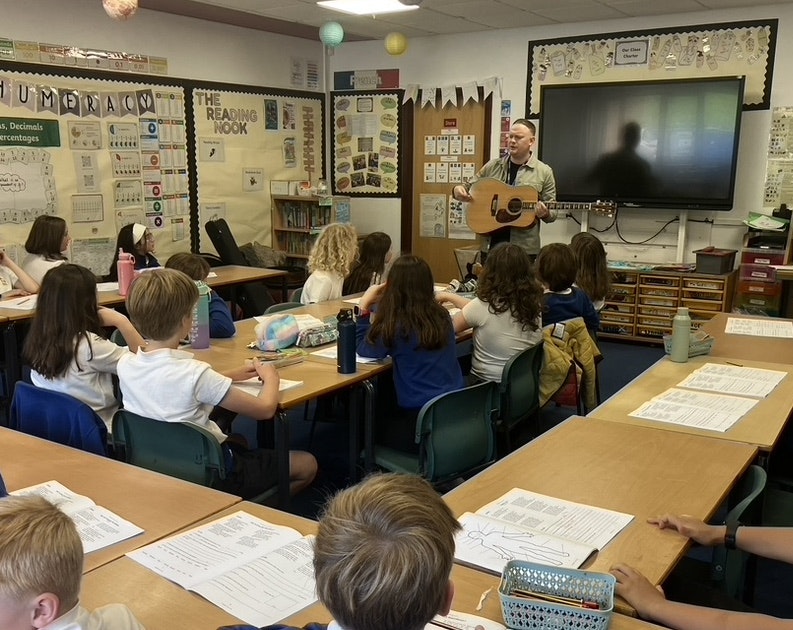
The Scots Sang an Leid Projeck was a seven-week educational initiative delivered at Newton Primary School in Dunblane, designed to deepen pupils’ understanding of Scots language and culture through traditional song. Working with six classes—from Primary 1, 4 and 6—the project used a mix of oral and workbook-based learning to introduce students to traditional Scots songs rooted in local history.
Songs such as Heather Jock and Will Ye Gang Tae Sheriffmuir were selected for their strong historical ties to the Dunblane area, sparking interest and engagement among the pupils. Younger students were taught simpler, repetitive nursery-style songs in Scots, while older pupils explored more complex songs, ballads and vocabulary. All songs were taught in a call-and-response format to ensure accessibility for children of all learning abilities.
The project culminated in a concert featuring professional traditional musicians—including Adam Brown (Rura, Ímar)—who performed and collaborated with the students. An accompanying illustration competition allowed children to engage with the songs creatively, further deepening their connection to the material.
Outcomes were overwhelmingly positive. Students demonstrated improved Scots vocabulary, greater confidence in singing and public performance, and increased interest in local history. Teachers noted especially strong participation from pupils with additional support needs. Constructive feedback will inform future iterations, including refining song selections and allowing more rehearsal time. Completed under budget, the project proved to be a highly successful model for integrating music, language, and heritage learning—one that fostered pride in local identity and opened the door for future Scots language education.